.png)
Why is my electricity bill so high? 7 checks to do tonight
A bill that's suddenly higher than you expected usually isn't one big mystery — it's one or two ordinary things adding up in the background. Before you assume something's broken or your retailer's ripped you off, these are the checks worth doing tonight, roughly in order of how much difference they tend to make.
1. Heating and cooling — the biggest single line item
Depending on your climate and how much you run it, heating and cooling commonly makes up around 40% of household electricity use — by far the largest single category on most bills. If your bill jumped, this is the first place to look: a system running longer or harder than last year, a thermostat left on a more extreme setting, or a system that's simply ageing and losing efficiency.
It's also where insulation and system choice compound each other — a poorly insulated home makes any heating or cooling system work harder for the same result, which we've covered in more detail separately.
2. Hot water — the quiet second-biggest cost
Hot water is typically the second-largest use of household electricity, commonly somewhere around 15–27% of the total, depending on your household size and system type. A few extra long showers a week, a temperature set higher than it needs to be, or an old inefficient system can all move this number more than people expect.
3. Standby power — small, but not nothing
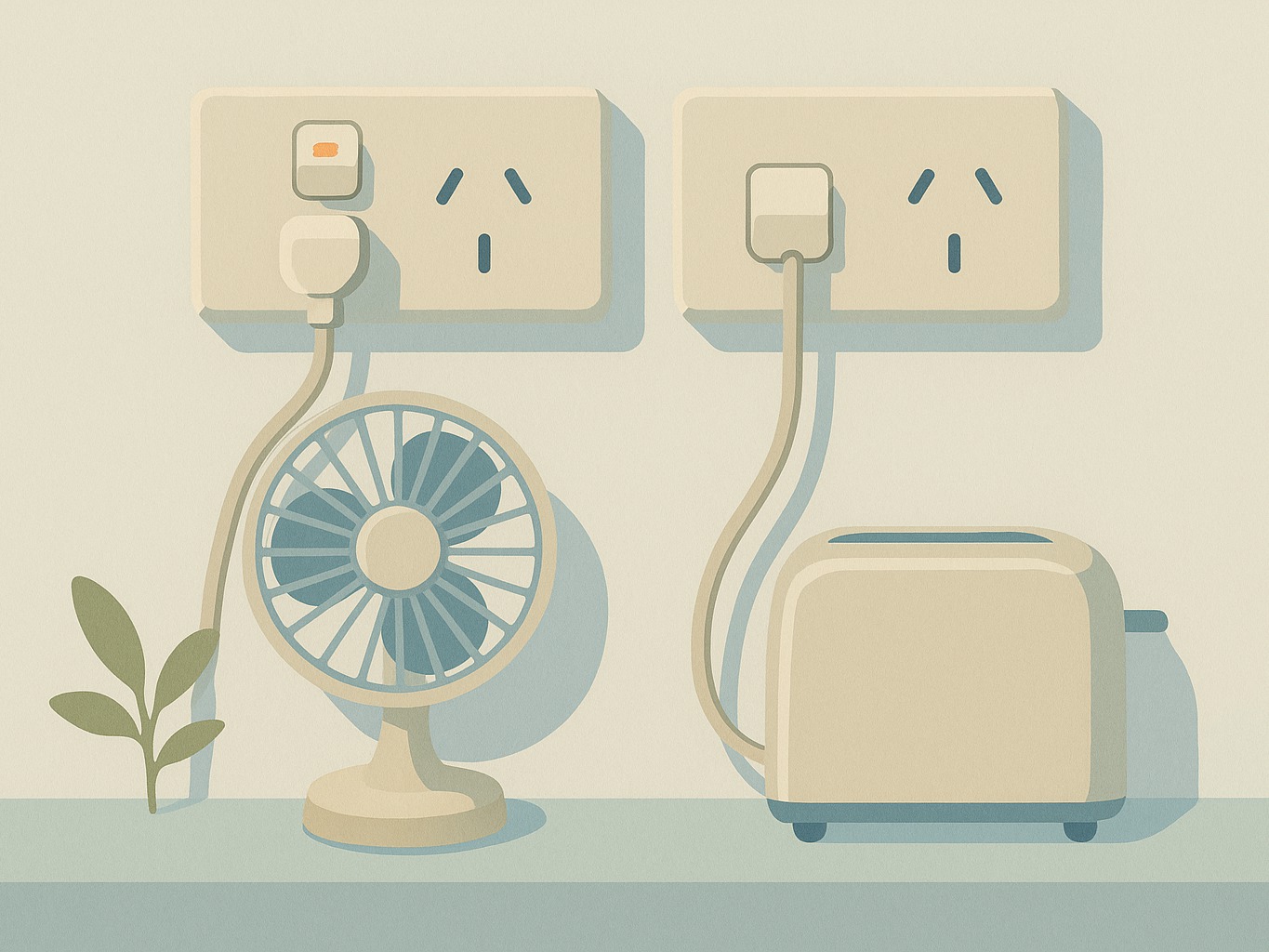
Appliances left on standby rather than switched off at the wall — TVs, game consoles, microwaves, routers — collectively draw what's sometimes called "vampire" power. It typically accounts for around 3% of household energy use, commonly costing somewhere up to $100 a year across a typical home's worth of devices. Not the biggest number on this list, but one of the easiest to fix: a power board with a single switch for the TV unit is a five-minute job.
4. Your heating and cooling habits, not just the equipment
Two identical systems can produce very different bills depending on how they're used. A thermostat set a couple of degrees more extreme than it needs to be, heating or cooling empty rooms, or running a system all day instead of when someone's actually home all add up. This is a habits check, not an equipment check — worth doing before you assume the system itself is the problem.
5. Your tariff — are you even being charged the right way?
Some households are still on a flat tariff when a time-of-use plan would suit them better, or vice versa — running the dishwasher and washing machine in the evening peak window on a time-of-use plan costs more than doing the same load at 11pm or on a weekend. It's worth checking what tariff you're actually on and whether your habits match it.
6. Whether your retailer's rates still stack up
Retailer rates and discounts change, and a plan that was competitive when you signed up isn't guaranteed to still be the best one available. The ACCC estimates households with average usage can save somewhere around $100–$250 a year by switching to a cheaper plan, and Victorian households comparing through Victorian Energy Compare saved an average of $170 in the past year. Comparing plans through Energy Made Easy (or Victorian Energy Compare, if you're in Victoria) takes about 10–15 minutes.
7. Rebates you might already be eligible for
Depending on your state, household type and the equipment you have, there are often rebates or concessions that reduce a bill directly rather than requiring you to change anything — and it's easy to simply not know one applies to you. Worth checking against your specific situation rather than assuming you're already claiming everything available.
Our take
None of these seven checks are dramatic individually, and that's sort of the point — a bill that's crept up rarely has one big cause. Heating, cooling and hot water are where the real money is; standby power, tariff mismatch, retailer rates and unclaimed rebates are where the easy, no-equipment-change wins are.
Frequently asked questions
What uses the most electricity in an Australian home?
Heating and cooling, commonly around 40% of total household electricity use, followed by hot water at roughly 15–27%. Source: energy.gov.au.
How much does standby power actually cost?
Typically around 3% of household energy use, commonly costing up to $100 a year for a typical home's worth of devices left on standby. Source: energy.gov.au.
Is switching electricity retailers actually worth the hassle?
Often, yes — the ACCC estimates average savings of $100–$250 a year for households that switch to a cheaper available plan, and comparing plans through Energy Made Easy typically takes 10–15 minutes. Source: energy.gov.au.
How do I know if I'm on the right tariff?
Check your bill for whether you're on a flat or time-of-use tariff, then compare that against when your household actually uses the most power — running large appliances outside peak windows only helps if your tariff actually charges less then.
Should I check for rebates even if I don't think I qualify?
Yes — eligibility varies by state, concession status and equipment, and rebates are easy to miss simply because nobody flagged that one applied to your situation.
Get your bill checked properly
Rather than guessing which of these seven is driving your bill, upload a recent bill for a free health check — it looks at your usage level, energy timing, retailer rates and rebates you could claim, specific to your account.
Start with your bill. Then fix what's actually driving it.
Before you get quotes
See when your home actually uses power
Get your free ComfortScore, then upload a PDF electricity bill. We’ll break down your peak, shoulder and off-peak use and your solar exports, so you can test how shifting use into the middle of the day, or adding a battery, changes when you buy from the grid.
1
Get your ComfortScore
Answer a few questions about your home. It’s free.
2
Upload a PDF bill
We read your usage by time of day, your tariff and your solar exports.
3
Try the what-ifs
Move load into the solar day or add a battery, and see how your grid use shifts.
What to read next
Get the next guide before you need it
One email when we publish something new — practical guides only, unsubscribe any time.