.png)
Is solar still worth it in 2026? Payback by city, and why orientation matters more
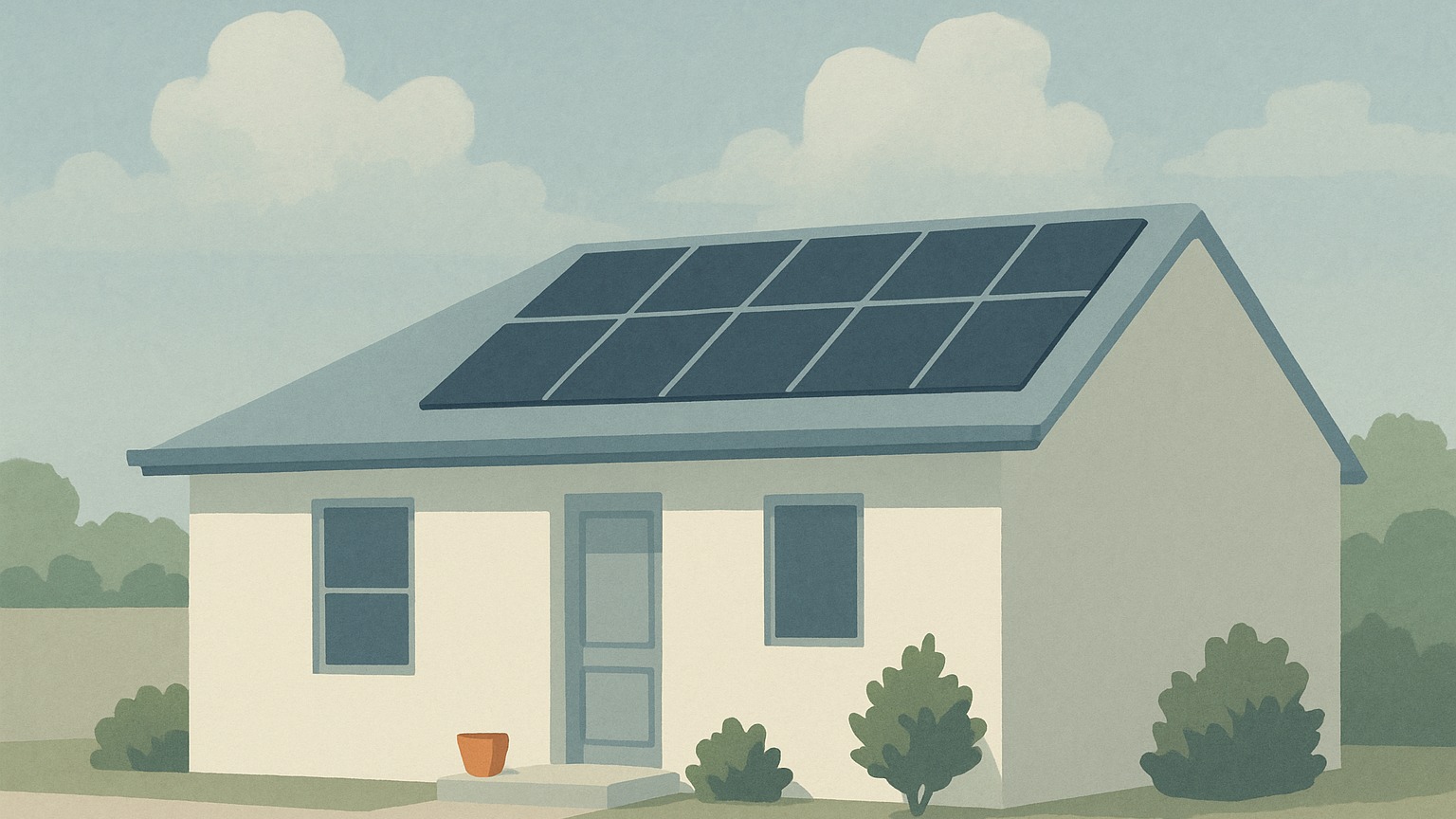
"Is solar still worth it?" is one of those questions with a genuinely different answer depending on your postcode — and, just as much, on which way your roof actually faces.
Here's what payback really looks like city by city in 2026, and why two identical solar systems on two identical houses can pay themselves off years apart.
Payback by capital city
For a standard system, out-of-pocket cost after rebates is commonly around $5,250 for 5kW, needing roughly 25–35 m² of sunny roof. How long that takes to pay for itself varies a lot by city:
- Adelaide: around 3 years — abundant sunshine, low system prices, a strong feed-in tariff and high electricity costs all line up in solar's favour
- Perth, Brisbane, Sydney: around 5 years
- Darwin: around 5–6 years, helped by a strong feed-in tariff of roughly 26c/kWh
- Canberra: around 6 years — low system costs offset by lower electricity prices and a weaker feed-in tariff
- Melbourne: around 6 years — mid-range system pricing with fewer sunshine hours than the northern cities
- Hobart: around 7 years — the longest payback, from higher electricity rates but noticeably less sunshine
Even the slowest city on this list — Hobart — still gets the system paid off well within its working life, which typically runs 20–25 years or more. Nowhere in Australia is solar a bad investment on payback alone; the real question is how much better it is in your specific location.
Why orientation matters as much as location
The city-level numbers above all assume a well-oriented roof. In practice, orientation can matter more than which city you're in.
Compared to true north (counted as the 100% baseline):
- North-east or north-west: around 5% less electricity over the year
- Due east or due west: around 15% less
- South-facing: the biggest penalty, and it varies by latitude — around 30% less in Sydney, down to around 15–17% less in Darwin and Townsville
That's why the same system, same city, same installer can have a meaningfully different payback period purely because of which way the roof slopes.
What if your roof doesn't face north?
An east/west split — some panels facing east, some facing west, instead of all of them facing north — produces roughly 15% less total electricity across the year. That sounds like a straightforward downside, but it comes with a real upside: a flatter, more spread-out generation curve through the day, rather than one sharp midday peak.
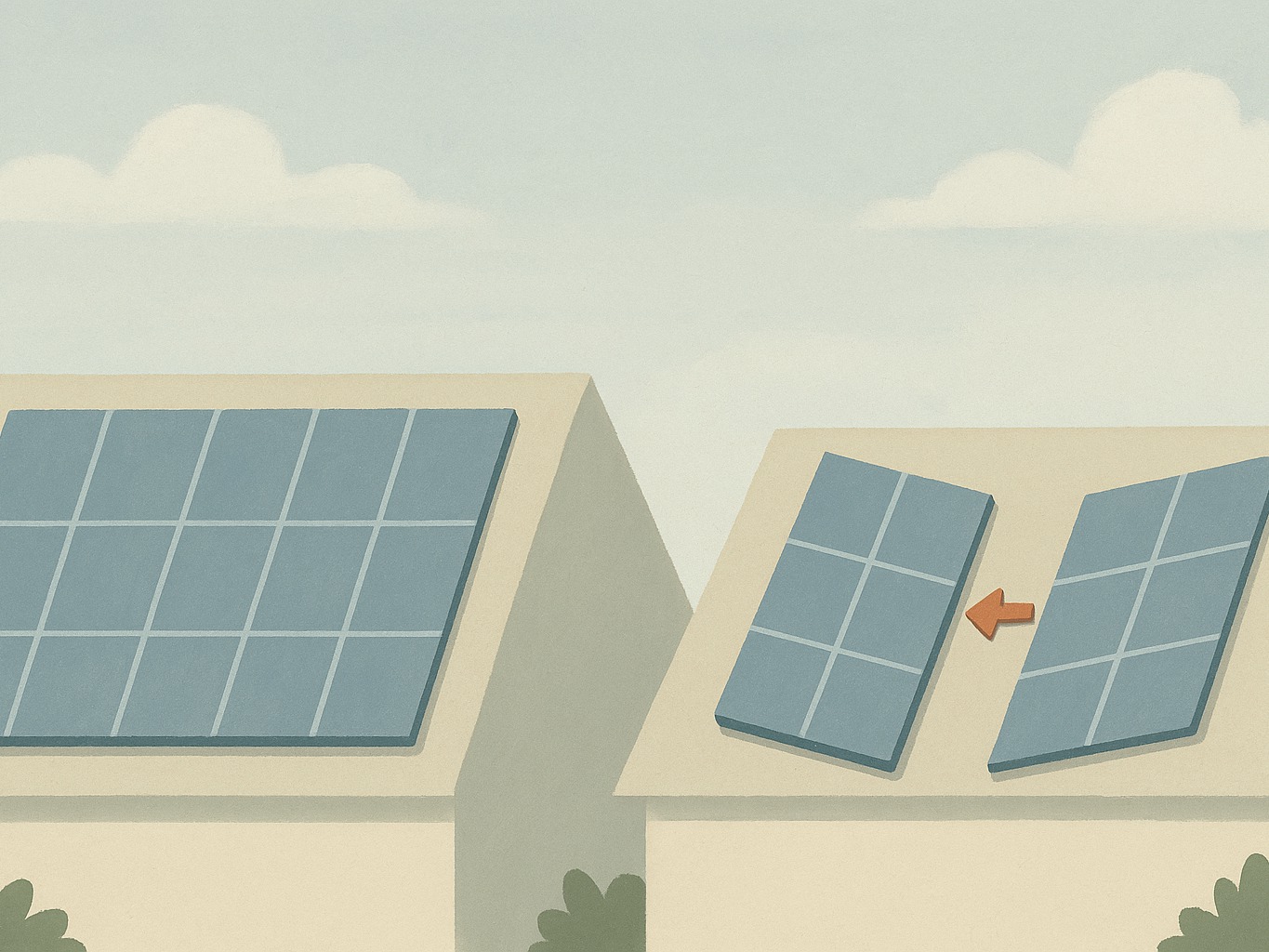
With feed-in tariffs now low in most states, using more of your own solar directly — rather than exporting it for a small credit and buying it back later — is often worth more than squeezing out the last few percent of total generation. For a household that's home and using power through the day, an east/west split can sometimes make more financial sense than a smaller all-north system, even with lower total output.
Pairing solar with a battery
Solar without a battery only pays at the rate you're either using power directly or being paid for what you export — and export rates have kept falling. A battery lets you shift the solar you're not using during the day into the evening instead, when you'd otherwise be buying electricity back from the grid at full price.
Whether a battery is worth adding on top depends heavily on how much you're currently exporting versus using directly, and how it interacts with the federal battery rebate, which we've covered in detail separately.
So, is solar still worth it in 2026?
For the overwhelming majority of Australian homes with a reasonable amount of north, north-east or north-west facing roof, yes — payback measured in single-digit years against a system that keeps producing for two decades or more is a genuinely strong return, wherever you are.
Where it gets more marginal is a heavily shaded, mostly south-facing roof, or a roof too small to justify the fixed costs of an installation. In those cases, the answer really does depend on the specific roof, not just the postcode.
Our take
City-level payback figures are a reasonable starting point, but they can undersell or oversell your actual situation by years in either direction, because orientation swings the numbers almost as much as location does. The only way to know your real payback is to look at your own roof, not the capital-city average.
Frequently asked questions
Which Australian city has the fastest solar payback?
Adelaide, typically around 3 years, thanks to strong sunshine, competitive system pricing, a good feed-in tariff and relatively high electricity costs. Source: CHOICE.
How much less power do east or west-facing panels produce?
Around 15% less than true north over a year; north-east or north-west lose only around 5%. Source: SolarQuotes.
Is south-facing solar ever worth it?
It's the weakest orientation — around 30% less output than north in Sydney, somewhat less of a penalty further north like Darwin or Townsville — but it can still be worthwhile if it's the only option and your electricity use lines up with what it does generate. Source: SolarQuotes.
Should I get an all-north system or an east/west split?
All-north maximises total generation. An east/west split produces roughly 15% less overall but spreads generation more evenly across the day, which can suit households that use more power outside the midday peak.
Do I need a battery to make solar worth it?
No — solar pays for itself on its own in every capital city. A battery is a separate decision on top, worth considering once you know how much of your solar you're currently exporting rather than using.
Find out what your roof can do
Payback figures by city are a starting point, not your answer — orientation, shading and roof size change the numbers for your specific home. Get your free ComfortScore and see what your roof is actually suited for.
Start with your home. Then size the system.
Before you get quotes
See when your home actually uses power
Get your free ComfortScore, then upload a PDF electricity bill. We’ll break down your peak, shoulder and off-peak use and your solar exports, so you can test how shifting use into the middle of the day, or adding a battery, changes when you buy from the grid.
1
Get your ComfortScore
Answer a few questions about your home. It’s free.
2
Upload a PDF bill
We read your usage by time of day, your tariff and your solar exports.
3
Try the what-ifs
Move load into the solar day or add a battery, and see how your grid use shifts.
What to read next




Get the next guide before you need it
One email when we publish something new — practical guides only, unsubscribe any time.