.png)
How to Keep Your House Warm in Winter (Cheap Fixes First)
Before you spend anything on insulation, there's a short list of genuinely cheap fixes worth doing first — and the trick that makes them work better is aiming them at the specific room that's actually cold, not the whole house at once.
Here's the order that gets the most warmth for the least money: find your coldest room, seal it, flip your fan, throw down a rug, then decide whether insulation is worth it — and if it is, put it there first.
Find your coldest room, then heat just that one
Heating an entire house to the same temperature all day is usually the most expensive way to stay warm, and it's often unnecessary. Shutting doors and closing vents to rooms you're not using, and heating only the room you're actually in, is a genuine and free saving — not a compromise.
If you already have a ducted system, ask whether it's zoned. Only conditioning the rooms in use, rather than the whole ducted run at once, commonly cuts running costs by somewhere around 30–40% compared to running the system unzoned. If it isn't zoned, retrofitting zoning typically costs $2,000–$4,500 depending on the number of zones — worth weighing against just closing doors and using a single portable or split-system heater in the room you're actually sitting in.
Seal the draughts — the single most effective first step
This is the fix with the best return for the least effort. Sustainability Victoria estimates that 9 out of 10 Victorian homes have unwanted draughts, and that air leakage through gaps around doors, windows, exhaust fans and floors accounts for up to 25% of a home's winter heat loss. That's a quarter of your heating bill potentially leaking out through gaps you can feel with your hand on a cold day.
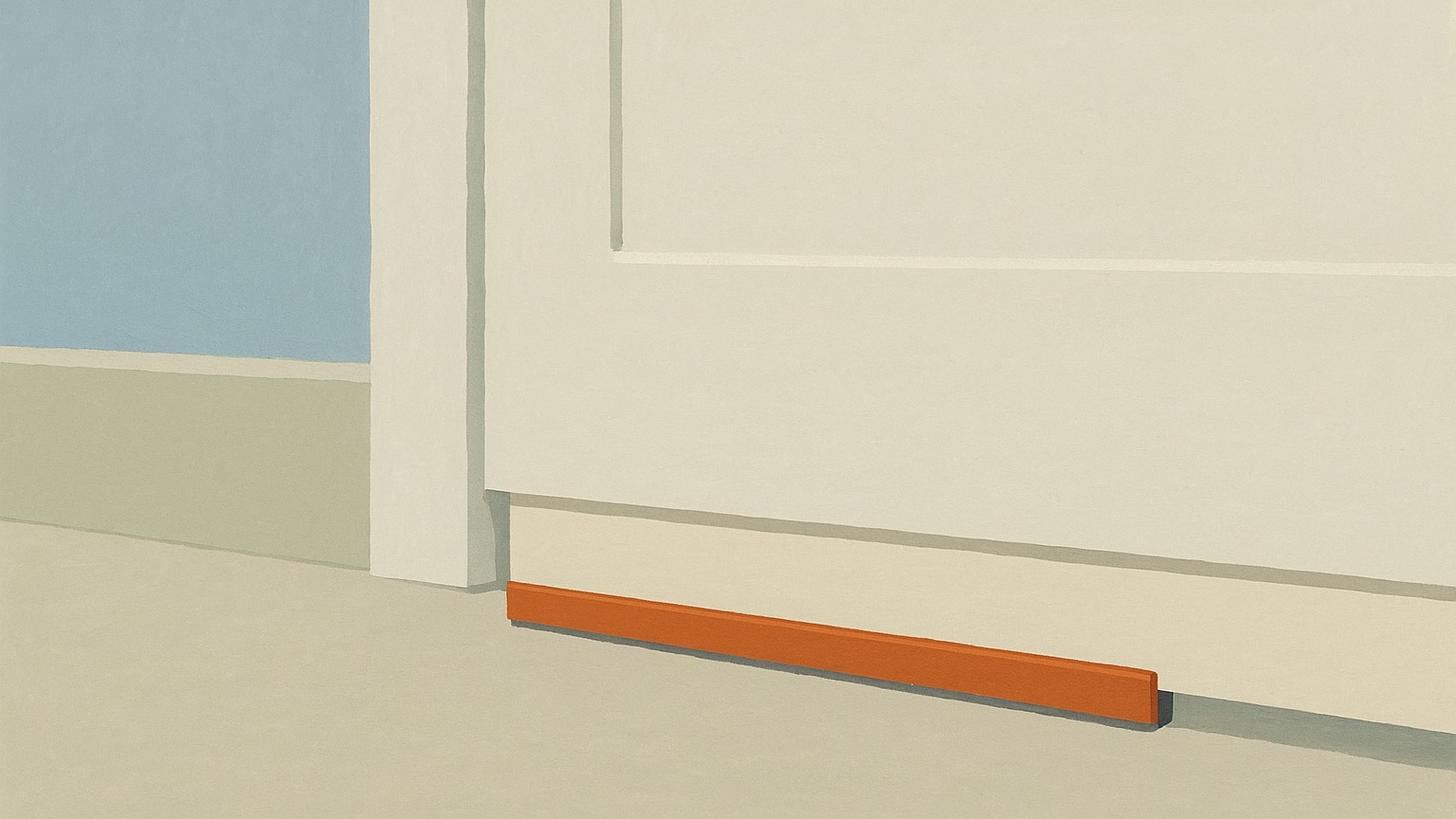
A door sweep or seal at the bottom of an external door is one of the cheapest fixes on this entire list — a few dollars, no tools beyond a pair of scissors, fitted in minutes. Self-adhesive foam or brush strips around window frames close the same kind of gap for not much more.
Flip your ceiling fan into reverse
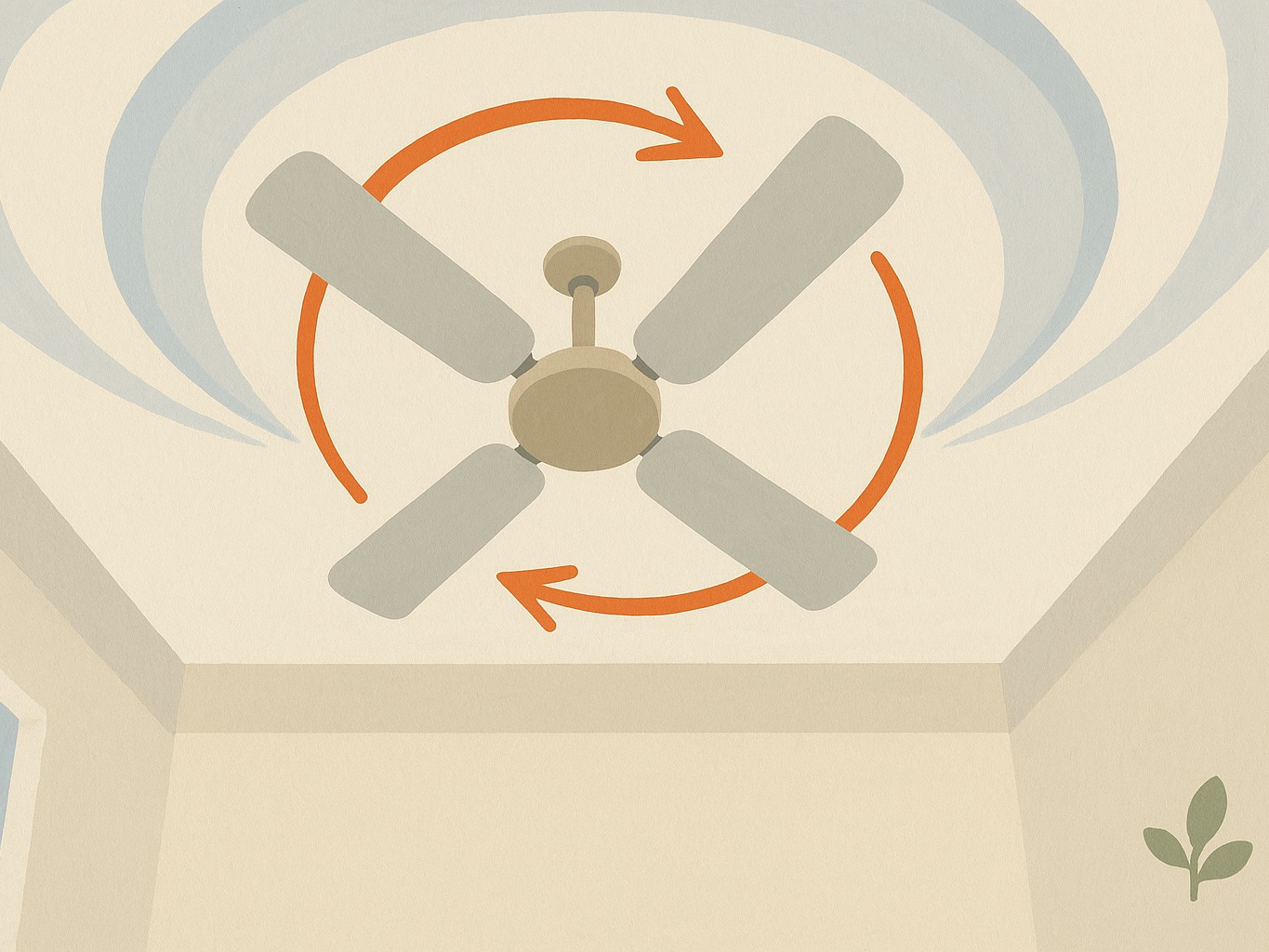
If your ceiling fan has a reverse switch — usually a small toggle on the motor housing — winter is when to use it. Set it to spin clockwise (viewed from below) on its lowest speed. Warm air naturally collects near the ceiling, and a slow clockwise fan gently pulls it back down along the walls into the room instead of leaving it stranded above head height. The Australian Government's energy.gov.au winter guide recommends exactly this: warm air collects in a layer just under the ceiling, and a reversed fan circulates it back through the room.
It won't transform a cold room on its own, and the size of the saving depends heavily on ceiling height — US Department of Energy and ENERGY STAR research on the same effect points to winter heating savings of up to around 10% in favourable conditions, enough to justify the zero-dollar cost of flipping a switch even if your own result is more modest.
Rugs on bare floors — small, but real
An uninsulated floor can account for somewhere around 10–20% of a home's total heat loss, and a rug is a genuinely low-cost way to claw some of that back. The insulating value of carpet or a thick rug can be up to 10 times higher than a bare hard floor, since the pile traps a layer of still air the same way batts do in a ceiling. The bigger the rug and the thicker the pile, the more of the room it's actually helping.
It's a real fix, not just a comfort trick underfoot — but it has limits. On a suspended timber floor with draughts pushing up between the boards, a rug makes the surface warmer without fully solving the airflow problem underneath; that's a job for underfloor sealing or insulation, not soft furnishings.
Then insulation — but aim it at the coldest room first
Once the free and near-free fixes are done, insulation is the upgrade that actually changes how much heat the room needs in the first place, rather than just redistributing or trapping what's already there. We've covered ceiling insulation R-values and costs in detail separately, and the same logic applies here: if budget is tight, a top-up targeted at the specific room that's coldest is usually a better use of money than spreading a smaller amount evenly across a house where most rooms are already reasonably comfortable.
Our take
The five fixes above cost close to nothing individually, and stack — sealing draughts, reversing a fan and adding a rug to the one room you actually spend winter evenings in will do more for how warm that room feels than the same money spread thinly across the whole house. Insulation is still the upgrade with the biggest total impact, but it's worth doing the cheap, targeted fixes first and seeing how much of the problem they solve before spending on it.
Frequently asked questions
How much heat does a house actually lose through draughts?
Up to around 25% of winter heat loss in a typical Victorian home is caused by air leakage through gaps around doors, windows, exhaust fans and floors — and 9 out of 10 Victorian homes have some degree of unwanted draught. Source: Sustainability Victoria (archived).
Does reversing my ceiling fan actually help in winter?
Yes — warm air collects in a layer just under the ceiling, and running the fan clockwise on low speed pulls it back down into the room. Source: energy.gov.au.
Is zoning my heating actually worth the cost?
If you already have a zoned ducted system, using it can cut running costs by roughly 30–40% compared to conditioning the whole house at once. Retrofitting zoning costs $2,000–$4,500, so it's worth comparing against simply closing doors and heating one room with a portable or split-system unit first. Source: WWR.
Do rugs actually make a measurable difference, or is it just comfort?
It's real, not just underfoot comfort — uninsulated floors can account for 10–20% of a home's heat loss, and a thick rug or carpet can insulate up to 10 times better than a bare hard floor. Source: ActewAGL.
Should I insulate the whole house or just the coldest room?
If budget is limited, targeting the specific room that's coldest usually delivers more felt improvement than spreading the same money thinly across a house where most other rooms are already reasonably comfortable.
Find your coldest room
These fixes work best aimed at the room that's actually the problem, not guessed at. Get your free ComfortScore and see which part of your home is losing the most heat before you spend on fixing it.
Start with your home. Then find out which room's actually costing you.
Before you get quotes
See when your home actually uses power
Get your free ComfortScore, then upload a PDF electricity bill. We’ll break down your peak, shoulder and off-peak use and your solar exports, so you can test how shifting use into the middle of the day, or adding a battery, changes when you buy from the grid.
1
Get your ComfortScore
Answer a few questions about your home. It’s free.
2
Upload a PDF bill
We read your usage by time of day, your tariff and your solar exports.
3
Try the what-ifs
Move load into the solar day or add a battery, and see how your grid use shifts.
What to read next




Get the next guide before you need it
One email when we publish something new — practical guides only, unsubscribe any time.