.png)
Is a home battery still worth it before the January 2027 rebate step-down? And what size do you actually need?
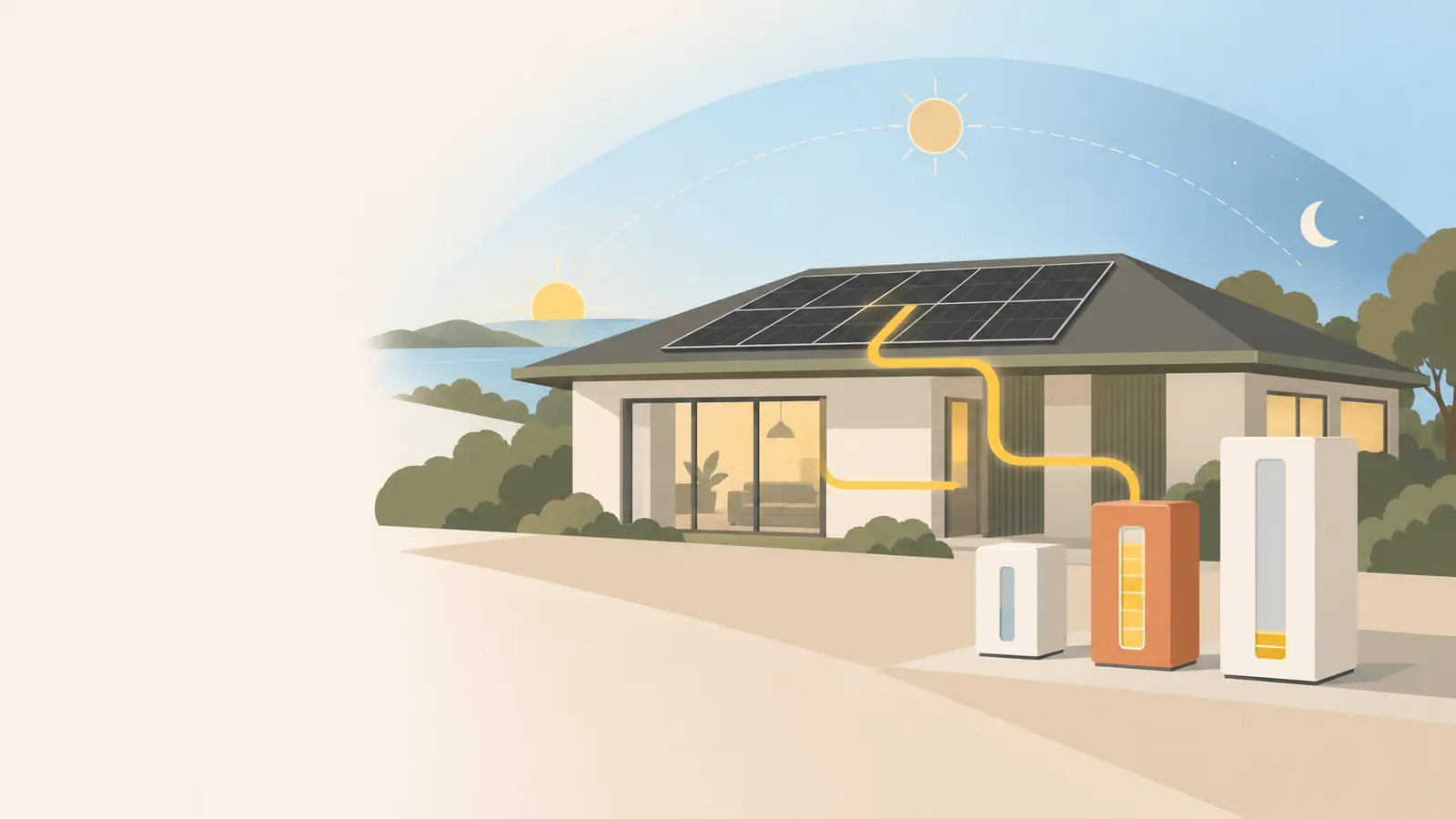
If you’ve been thinking about adding a battery to your solar system, you’ve probably heard that Australia’s home battery rebate changed on 1 May 2026 — and that it steps down again on 1 January 2027.
Both are true.
But the rebate hasn’t disappeared, and you haven’t missed the opportunity.
The Federal Government’s Cheaper Home Batteries Program is still running, and eligible batteries connected to rooftop solar can still receive a significant upfront discount. What changed is how that support is calculated, particularly for larger batteries.
And there’s a useful message hidden in the change:
The biggest battery isn’t necessarily the best battery.
The better question is how much energy your home actually needs to store.
What changed to the battery rebate on 1 May 2026?
Australia’s Cheaper Home Batteries Program started on 1 July 2025.
Rather than applying for a cash rebate yourself, the incentive is generally built into your battery quote through Small-scale Technology Certificates, or STCs.
On 1 May 2026, two important changes came into effect.
1. The rebate started stepping down faster
The STC factor fell from 8.4 to 6.8 on 1 May 2026.
It will then reduce progressively through to the end of the scheme in 2030.
So yes: all else being equal, a battery installed today receives less support than one installed before May — and more than one installed after New Year.
But that’s only half the story.
2. Larger batteries now receive progressively less support
The rebate is no longer applied equally to every additional kilowatt-hour of battery capacity.
For batteries installed from 1 May 2026:
- the first 14 kWh of usable capacity receives 100% of the applicable STC factor
- capacity between 14 and 28 kWh receives 60%
- capacity between 28 and 50 kWh receives 15%.
Eligible systems can still be between 5 and 100 kWh nominal capacity, but only the first 50 kWh of new usable capacity attracts STCs.
That makes the first 14 kWh particularly valuable.
And it deliberately reduces the incentive to install very large batteries simply because a rebate is available.
So, is a battery still worth it in 2026?
For the right home, it can be.
But a rebate alone doesn’t make a battery a good investment.
A battery saves money primarily by storing electricity when it’s cheap — particularly excess solar from the middle of the day — and supplying it later when you would otherwise be buying electricity from the grid.
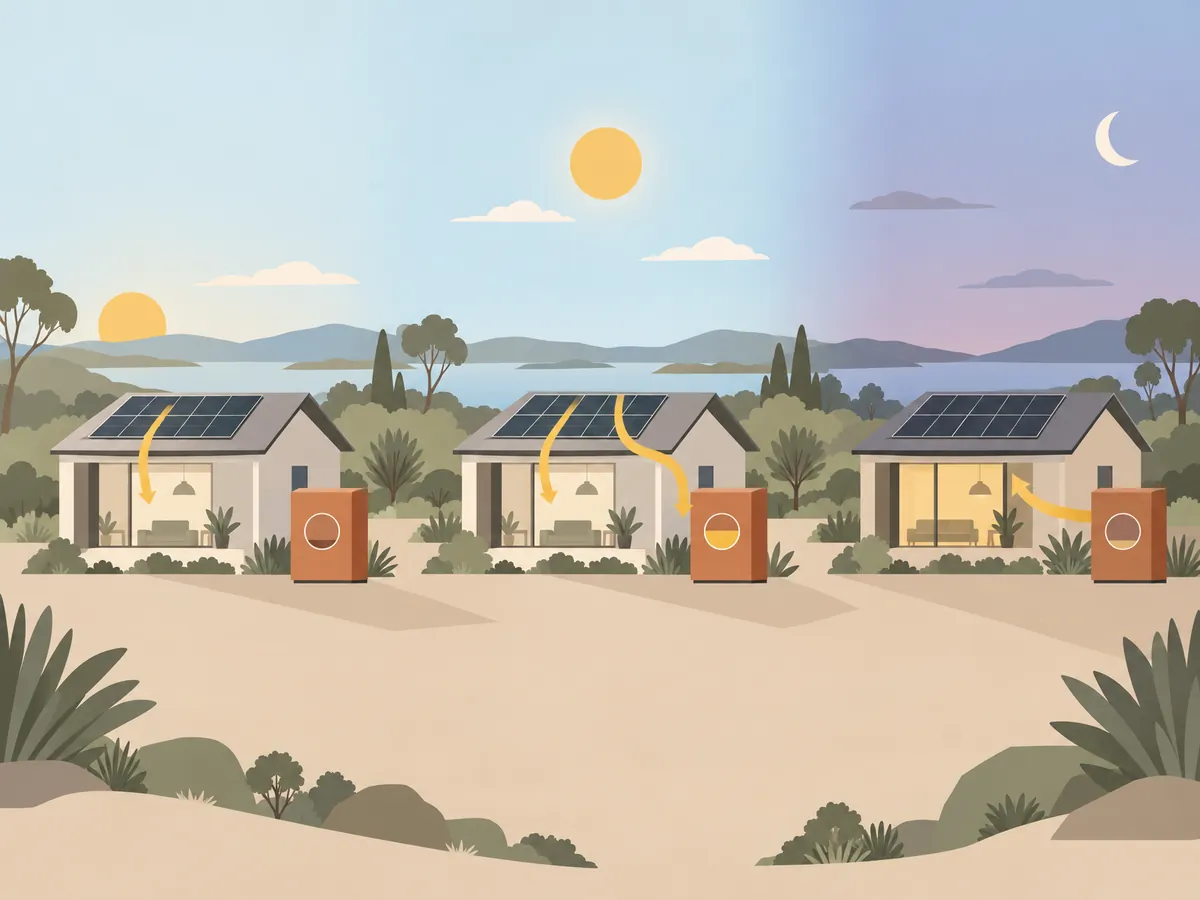
That means the value depends on your individual home.
Some of the biggest factors are:
- how much solar your home produces
- how much surplus solar you currently export
- how much electricity you use after the sun goes down
- your electricity tariff
- your solar feed-in tariff
- battery price after incentives
- whether you can charge cheaply from the grid
- whether backup power is valuable to you.
The Australian Government’s Solar Consumer Guide makes the same point: batteries can lower bills, but they won’t make financial sense for every household and may have a substantially longer payback period than solar panels alone.
So don’t start with:
“How big a battery can I afford?”
Start with:
“How much electricity am I regularly buying when my solar isn’t covering the house?”
What size home battery do you actually need?
Australian home batteries are commonly somewhere around 4–14 kWh, although much larger residential systems are increasingly available.
Your ideal size isn’t determined by the size of your house.
It’s determined by when and how you use electricity.
As a rough way to think about it, here’s the battery size worth investigating for each situation:
- Low evening usage, small household: 5–8 kWh
- Typical solar household: 8–14 kWh
- High evening usage / larger family: 14–20 kWh
- All-electric home, pool or significant loads: 15–25+ kWh
- EV charging, very high consumption or backup requirements: model from actual usage rather than relying on a rule of thumb
These aren’t recommendations for a particular home. Your smart-meter data and solar generation are far more useful than household size alone.
Australian homes use roughly 11–23 kWh of electricity per day on average, but that total can be misleading when sizing a battery because some of that consumption happens while your solar is already supplying the house.
Here’s a simple example
Suppose your home uses 20 kWh each day.
You might assume you need a 20 kWh battery.
But imagine:
- 8 kWh is used during daylight hours and is largely covered directly by solar
- 12 kWh is used in the evening and overnight.
A battery somewhere around that remaining 12 kWh requirement may make more sense than automatically installing 20 kWh.
Then ask a second question:
Can your solar system reliably put 12 kWh back into the battery the next day?
If not, you’re paying for capacity you may rarely use.
Why bigger isn’t always better
Imagine installing a 30 kWh battery but only cycling 10 kWh through it on a typical day.
Twenty kilowatt-hours of storage is sitting mostly unused.
You paid for it.
It takes up space.
And under the post-May 2026 rebate structure, those additional kilowatt-hours also receive progressively less government support.
This is exactly why the Government advises households that bigger is not always better, noting that a battery that’s too large for the home’s solar system or inverter can limit its potential benefit.
The sweet spot is normally a battery that you can regularly charge and regularly use.
Think about power as well as capacity
There’s another number that’s easy to overlook.
kWh tells you how much energy the battery can store.
kW tells you how much power it can deliver at once.
Think of kWh as the size of a water tank and kW as the size of the pipe coming out of it.

A large battery with a relatively low power output might contain plenty of energy but still need help from the grid if you simultaneously run an induction cooktop, air conditioner, oven and other large appliances.
The Government’s battery guidance specifically recommends considering both battery capacity and rated power output when choosing a system.
This becomes increasingly important as homes move away from gas and towards:
- induction cooking
- heat-pump hot water
- electric heating and cooling
- EV charging.
Should you size the battery for the home you have today?
Not always.
A battery might last around a decade or more, so think about what could change.
Are you planning to:
- replace gas heating with electric heating?
- install a heat-pump hot-water system?
- buy an EV?
- add a pool?
- extend the house?
- work from home more often?
The same principle applies when sizing solar: future electrification can materially change your home’s electricity use.
There is a balance, though.
Buying an enormous battery today for an EV you might purchase six years from now isn’t necessarily the most economical solution.
A modular battery that can be expanded later may make more sense — but check whether future additions will qualify for rebates and how the manufacturer’s warranty treats expansion.
What if you don’t have solar yet?
The federal battery incentive applies to eligible batteries connected to a new or existing rooftop solar system.
If you’re starting from scratch, it usually makes sense to look at solar and battery sizing together.
In fact, solar may deserve priority.
Solar electricity used directly in your home avoids buying that electricity from the grid without needing to pass it through a battery first.
A battery then helps move some of your remaining solar generation into the evening.
Think of it as a system:
Generate → use → store → buy from the grid
not simply:
Buy a battery → save money.
What about blackout protection?
This is one area where the answer isn’t purely financial.
Some people want a battery because keeping the fridge, lights, internet, medical equipment or essential appliances running during an outage matters to them.
But don’t assume every battery automatically provides backup.
Your system needs to be designed and configured for it.
Depending on the installation, backup may cover:
- the whole home
- selected essential circuits
- only one phase of a three-phase home.
The size and power output required for backup may therefore be quite different from the battery that gives you the best bill savings.
The three numbers we’d check before buying a battery
Before comparing brands, ask for these three numbers.
1. Your daytime solar exports
How much solar energy are you regularly sending to the grid?
That’s energy a battery could potentially capture.
2. Your evening and overnight grid consumption
How much electricity do you buy once solar generation drops?
That’s energy a battery could potentially replace.
3. Your seasonal difference
Don’t size a battery from one sunny spring or summer day.
Look across the year.
Solar production falls in winter while heating demand may increase significantly. Likewise, summer air-conditioning can dramatically change your consumption profile.
The most accurate way to understand this is with 12 months of smart-meter interval data rather than just looking at the total consumption printed on your electricity bill.
A 10 kWh battery used every day can beat a 20 kWh battery used halfway
Battery economics are ultimately about utilisation.
A smaller battery that regularly:
- charges from surplus solar,
- discharges during expensive periods, and
- repeats that cycle,
can make better financial sense than a much larger battery that spends much of its life partly empty or partly full.
The May 2026 rebate changes reinforce this.
The incentive hasn’t disappeared.
Instead, the economics increasingly encourage households to find the right-sized battery, rather than automatically going larger.
So, should you install before 1 January 2027 or wait?
Waiting won’t give you a larger rebate. Under the current federal schedule, it only gets smaller:
- May–December 2026: 6.8 (the current factor)
- January–June 2027: 5.7
- July–December 2027: 5.2
- with further reductions scheduled through to 2030.
The drop from 6.8 to 5.7 means roughly 16% less rebate per eligible kilowatt-hour for a battery installed from 1 January 2027. The rebate is tied to when your system is installed, not when you sign a quote — so if you’re aiming to beat the step-down, allow time for quoting, scheduling and installation over the busy pre-Christmas period.
That said, a rushed decision on the wrong-sized battery costs more than a few months’ difference in rebate. Battery prices may also continue falling, so the decision shouldn’t be based on the rebate countdown alone.
Instead, look at the complete calculation:
installed battery cost − incentives versus expected annual savings + the value you place on backup and energy independence.
Our take
The May 2026 change hasn’t killed the case for home batteries, and neither will the January 2027 step-down.
It has made good sizing more important.
For many Australian households, the strongest starting point is now around the first 14 kWh of usable battery capacity, where the federal rebate receives its full applicable factor.
But that doesn’t mean everyone needs 14 kWh.
A household using relatively little electricity after sunset might be better served by 7 or 10 kWh.
An all-electric household with high evening loads, an EV and substantial rooftop solar might reasonably need much more.
Your home should determine the battery. The rebate shouldn’t.
Before getting quotes
Check:
- 12 months of electricity use
- how much solar you’re exporting
- when you’re buying electricity from the grid
- your current tariff
- usable battery capacity, not just nominal capacity
- battery power output
- backup capability
- warranty and expected cycle life
- whether future expansion is possible
- the rebate amount shown clearly on the quote
- the installer’s estimated savings and payback.
Eligible batteries must meet program requirements, including approved equipment and installation by an appropriately accredited installer.
Find out what makes sense for your home
There’s no single battery size that’s right for every Australian home.
That’s why MyCool Home starts with the home first.
Understand how your property performs, where your energy is going and which upgrades are likely to make the biggest difference — before spending thousands of dollars on equipment.
Start with your home. Then choose the upgrade.
Frequently asked questions
Is there still a solar battery rebate in Australia in 2026?
Yes. The federal Cheaper Home Batteries Program continues in 2026. The incentive changed on 1 May 2026, with a lower STC factor and tiered support based on battery capacity. Source: Department of Climate Change, Energy, the Environment and Water.
How much is the home battery rebate in 2026?
There isn’t one fixed dollar rebate. The discount is calculated using STCs and depends on usable battery capacity, the applicable STC factor and the value of the certificates. The program is designed to provide approximately a 30% discount across a range of eligible batteries, although the actual amount on a quote will vary. Source: Department of Climate Change, Energy, the Environment and Water.
What size battery does the average Australian home need?
There isn’t a universal size. Household batteries commonly range from around 4–14 kWh, but the right capacity depends mainly on solar generation, evening consumption, tariffs and future electricity needs. Source: energy.gov.au.
Is a 10 kWh battery enough for a house?
It can be for many households, particularly where daytime consumption is supplied directly by solar. Look at how many kWh you typically consume between late afternoon and the following morning rather than total daily consumption alone.
Is a 20 kWh battery too big?
Not necessarily. Larger all-electric homes, households with high evening consumption, EVs or large solar systems may use that capacity. The key question is whether you can regularly charge and discharge it.
Will the battery rebate decrease again in 2027?
Under the current schedule, yes. The STC factor falls from 6.8 in May–December 2026 to 5.7 for January–June 2027 and 5.2 for July–December 2027. Source: Department of Climate Change, Energy, the Environment and Water.
Before you get quotes
See when your home actually uses power
Get your free ComfortScore, then upload a PDF electricity bill. We’ll break down your peak, shoulder and off-peak use and your solar exports, so you can test how shifting use into the middle of the day, or adding a battery, changes when you buy from the grid.
1
Get your ComfortScore
Answer a few questions about your home. It’s free.
2
Upload a PDF bill
We read your usage by time of day, your tariff and your solar exports.
3
Try the what-ifs
Move load into the solar day or add a battery, and see how your grid use shifts.
What to read next




Get the next guide before you need it
One email when we publish something new — practical guides only, unsubscribe any time.