.png)
Heat pump hot water rebates in 2026: what each state actually pays, and what it costs to run
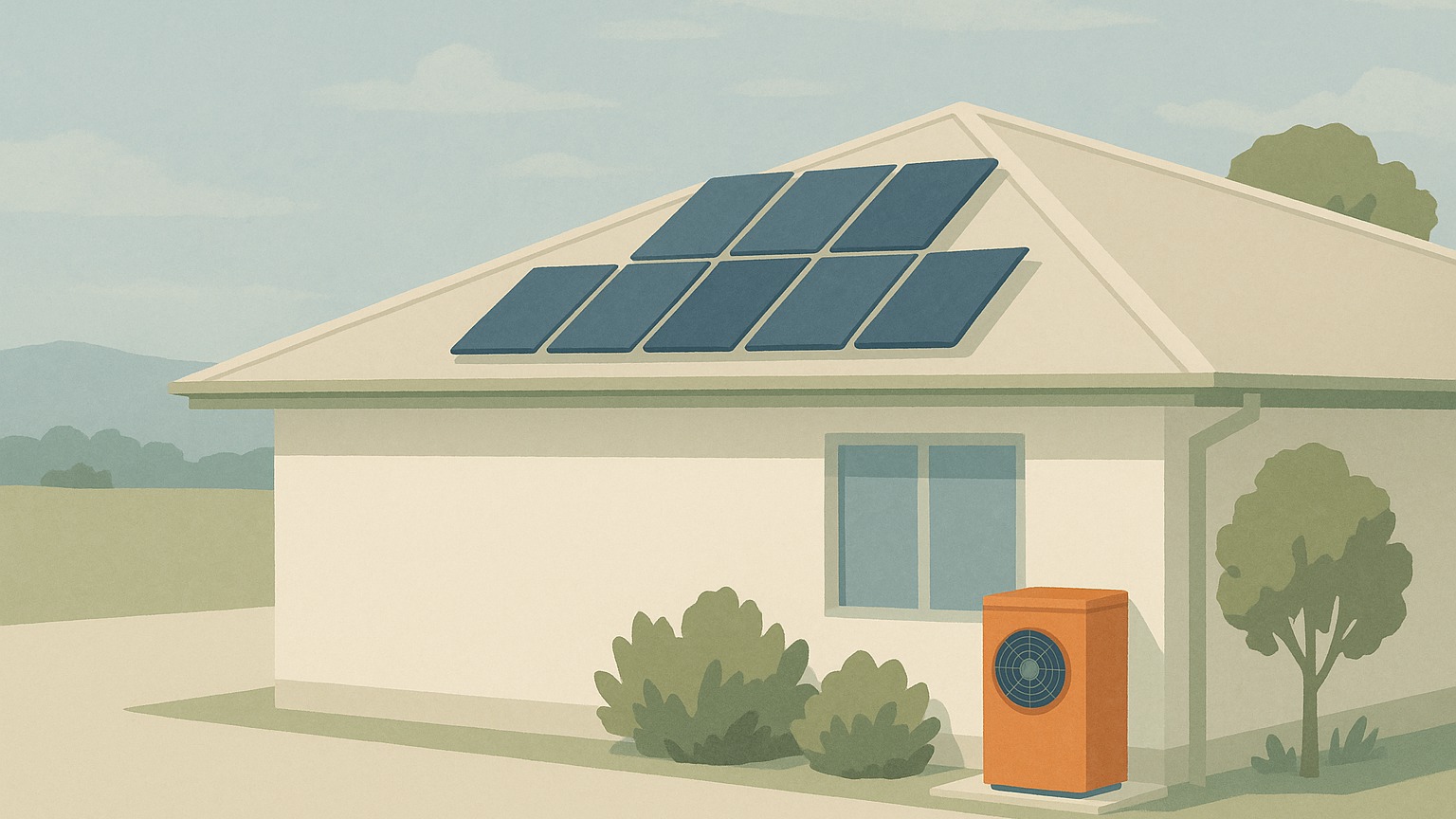
Hot water is usually the second or third biggest energy cost in an Australian home, right behind heating and cooling. If yours still runs on an old electric tank or ageing gas system, a heat pump hot water unit is one of the few upgrades that pays for itself from day one and keeps paying every year after.
The tricky part is knowing what you can actually claim. Rebates for heat pump hot water are a patchwork: one federal scheme plus a different state or territory top-up depending on where you live, and the numbers move every year.
Here's what's actually on offer in 2026, state by state, and what a heat pump costs to run once it's installed.
What a heat pump hot water system actually does
A heat pump hot water system doesn't generate heat the way a gas burner or an electric element does. It works like a fridge in reverse: it pulls heat out of the surrounding air and moves it into the water in the tank.
Because it's moving heat rather than making it from scratch, it typically uses around a third of the electricity of a standard electric tank for the same amount of hot water. That's the whole basis for the rebate — it counts as a form of renewable energy under federal law.
The federal rebate: Small-scale Technology Certificates
Every heat pump hot water system installed in Australia is eligible for support through the Small-scale Renewable Energy Scheme (SRES), regardless of which state you're in.
Instead of a cash rebate, the installer generates Small-scale Technology Certificates (STCs) based on the system's efficiency and your climate zone, and sells them on your behalf — usually as an upfront discount on the quote rather than something you claim yourself.
In practice that's worth anywhere from a few hundred dollars up to $600 or more for an efficient system in a favourable climate zone. It's worth less each year: the scheme is legislated to step down annually before closing in 2030, so the same system installed today is worth less in STCs than one installed two years ago.
What each state adds on top
The federal STC discount is just the starting point. Most states run their own energy efficiency scheme on top of it, and a few add a further council-level rebate. Here's the state-by-state picture.
New South Wales
The NSW Hot Water Upgrade Incentive, part of the Energy Savings Scheme, is worth up to $640 when you replace an electric system, or up to $330 replacing a gas system. It stacks with the federal STC discount.
Victoria
Victorian Energy Upgrades (VEECs) typically knock $560–$630 off a heat pump hot water installation. Combine that with the Solar Homes hot water rebate — which adds a further $400 for a locally-made system — and the total support can reach roughly $1,400.
South Australia
SA's Retailer Energy Productivity Scheme (REPS) doesn't publish one fixed number — individual retailers set their own incentive — but typical support sits around $250–$850, with more available to priority-group households (concession card holders and similar). If you're in the City of Adelaide council area specifically, a separate council rebate can cover 50% of the cost up to $2,000 when you're replacing a gas or wood heater — check eligibility with the council before you assume it applies.
Australian Capital Territory
The ACT's Home Energy Support Scheme and ActewAGL's upgrade offer combine for $1,250 off plus a $250 bill credit for most households, rising to $2,000 off plus a $400 bill credit for concession card holders. The ACT also runs a low-interest loan (around 3%) of up to $20,000 over 10 years if you'd rather finance the balance than pay it upfront.
Queensland and Western Australia
Neither state currently runs a dedicated heat pump hot water rebate on top of the federal STC discount. The federal support still applies — it's just that there's no additional state top-up to stack it with, at least for now.
What it actually costs to run
Rebates are a one-off. Running cost is what you actually feel every quarter, and this is where heat pumps separate themselves from the alternatives.
A heat pump hot water system typically uses somewhere around 700–1,000 kWh a year for an average household — roughly a third of what a conventional electric element uses to heat the same amount of water. On a typical household electricity rate, that works out to somewhere in the range of $200–$300 a year, against roughly $700–$1,000 a year for a plain electric storage tank and $400–$700 a year for gas, depending on your local gas supply charges and usage.

Put another way: switching from a plain electric tank to a heat pump can save somewhere in the order of $500–$1,000 a year, depending on your tariff and household size. Combined with a rebate in the hundreds to low thousands, that often means the upgrade pays for itself within one and a half to three years — and every year after that is money back in your pocket.
Is it worth switching?
If you're currently on electric resistance hot water, the case is usually straightforward: lower running costs, a rebate that covers a meaningful chunk of the upfront cost, and a payback period short enough that most households recover the difference well within the system's working life.
If you're on gas, the answer depends more on your local gas prices and whether you're planning to move away from gas entirely — heat pump hot water is often one of the easiest first steps in an all-electric plan, since it doesn't require any change to how you use hot water day to day.
Either way, the number that actually matters is your own — what you're paying now, and what a heat pump would cost to run in your home specifically, not a national average.
Our take
The rebate picture for heat pump hot water changes every year and varies more by postcode than most homeowners expect. NSW, Victoria, South Australia and the ACT all add something on top of the federal discount; Queensland and WA currently don't, though the federal STC discount still applies everywhere.
The running-cost case doesn't depend on any of that. A heat pump uses a fraction of the electricity of an electric tank and is typically cheaper than gas too — the rebate just shortens how long it takes to feel the difference.
Frequently asked questions
How much is the heat pump hot water rebate in 2026?
It depends on your state. Every system qualifies for the federal STC discount (a few hundred dollars up to $600+), and most states add a further rebate on top: up to $640 in NSW, up to roughly $1,400 in Victoria combined with Solar Homes, $250–$850 in South Australia, and up to $2,000 plus a bill credit in the ACT. Source: SolarQuotes.
Is a heat pump hot water system cheaper to run than gas?
Usually, yes. Typical running costs are around $200–$300 a year for a heat pump against roughly $400–$700 a year for gas, though local gas supply charges make a real difference to where gas lands in that range. Source: EnergySorted.
Does the federal rebate reduce every year?
Yes. The Small-scale Renewable Energy Scheme is legislated to step down annually before closing in 2030, so the STC discount on an equivalent system is worth a little less each year. Source: SolarQuotes.
Can I combine the federal rebate with my state's rebate?
Yes — the federal STC discount and your state or territory scheme (where one exists) are designed to stack. Council-level rebates, like the City of Adelaide's, can sometimes add a third layer on top, but eligibility is specific to that council area.
How long does a heat pump hot water system take to pay for itself?
For a household switching from electric resistance, roughly one and a half to three years is a reasonable estimate once rebates and running-cost savings are both counted in — though your actual payback depends on your household's hot water use and local electricity rate.
Check what you could claim
Rebate amounts and eligibility change by postcode and by year. Rather than guessing which ones apply to you, get your free ComfortScore and see which rebates — hot water and otherwise — your home is actually eligible for.
Start with your home. Then see what it qualifies for.
Before you get quotes
See when your home actually uses power
Get your free ComfortScore, then upload a PDF electricity bill. We’ll break down your peak, shoulder and off-peak use and your solar exports, so you can test how shifting use into the middle of the day, or adding a battery, changes when you buy from the grid.
1
Get your ComfortScore
Answer a few questions about your home. It’s free.
2
Upload a PDF bill
We read your usage by time of day, your tariff and your solar exports.
3
Try the what-ifs
Move load into the solar day or add a battery, and see how your grid use shifts.
What to read next



Get the next guide before you need it
One email when we publish something new — practical guides only, unsubscribe any time.