.png)
Evaporative Cooler vs Reverse Cycle: When to Switch
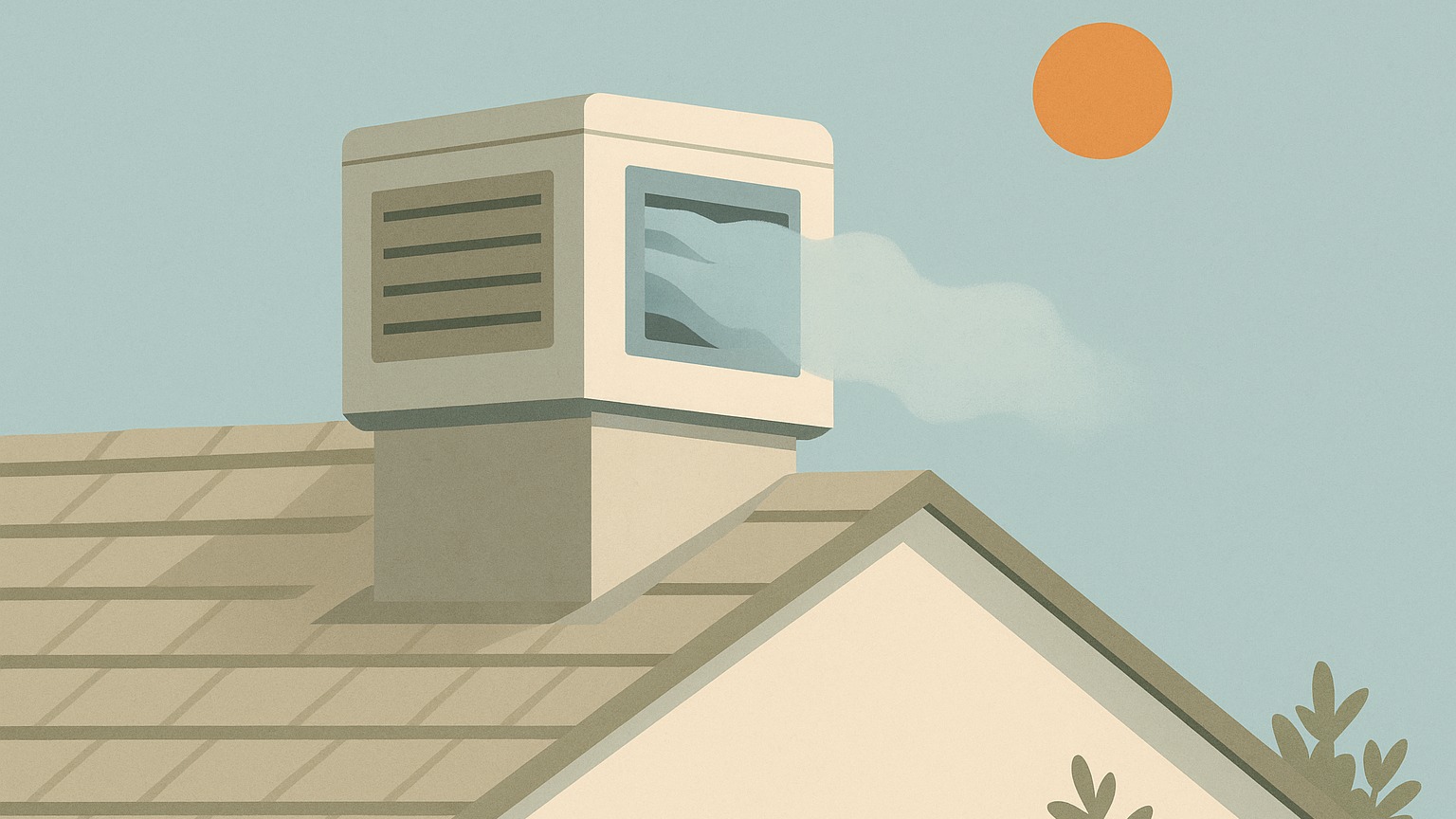
Evaporative cooling has a loyal following for a good reason — it's genuinely cheap to run, and on a hot, dry day it can drop a room's temperature dramatically. The problem is the one night a year it matters most for actually sleeping — a sticky, humid heatwave night — is exactly when it stops working.
Here's where evaporative cooling holds up, where it quietly fails, what it actually costs to run versus reverse cycle, and the upgrade paths if you're ready to switch.
Where evaporative cooling genuinely excels
On a hot, dry day, evaporative cooling is hard to beat on running cost. It typically costs somewhere around $0.10–$0.20 an hour to run, plus roughly 2 cents an hour in water — using up to 75% less electricity than a reverse cycle system doing the equivalent job. It also constantly exchanges the air in the house rather than recirculating it, which is part of why people who grew up with it prefer the feel of it to sealed, recirculated air conditioning.
It's also genuinely climate-dependent in a way that isn't just marketing. In hot, dry inland climates — much of Victoria, Tasmania, South Australia and parts of Western Australia — evaporative systems work about as well as anything you can buy. That's a real regional difference, not a generic pros-and-cons list.
Where it actually fails — humidity, not just heat
This is the part that catches people out, because it isn't really about how hot it gets — it's about how humid the air already is. Evaporative cooling works best below 40% relative humidity, has noticeably reduced capacity up to around 70%, and delivers little to no cooling benefit above that.
The difference in practice is dramatic. On a hot, dry day of 35°C at 30% relative humidity, an evaporative system can bring an indoor room down to around 23°C. At the same 35°C but 60% relative humidity, it may only manage around 30°C — barely cooler than outside, and nowhere near enough to sleep comfortably.
That's precisely the scenario a lot of Australian summer nights actually deliver: a hot day followed by a change that pushes humidity up overnight, right when everyone's trying to sleep. Evaporative cooling doesn't fail randomly — it fails predictably, on the exact nights it's being asked to do the most.
Running costs, side by side
Evaporative cooling's cost advantage is real, not exaggerated — commonly $0.10–$0.20 an hour in electricity against roughly $0.25–$0.50 an hour for a reverse cycle split system doing equivalent cooling. What often gets left out of that comparison is water: a whole-home ducted evaporative system can use somewhere around 15–30+ litres of water an hour during continuous operation — a real cost, and a real consideration if you're anywhere with water restrictions.
The upgrade paths
If evaporative cooling is letting you down on the nights that matter, there are a few honest options, not just one "correct" upgrade:
Like-for-like evaporative replacement
If you like evaporative cooling's running cost and the humid-night problem is rare where you live, simply replacing an ageing unit starts from around $4,400. It doesn't fix the humidity problem — it just keeps the same system working reliably. No rebate applies here, since evaporative cooling is already an electric system.
Full ducted reverse cycle retrofit
This is the bigger project, and it's bigger than people expect: evaporative ductwork is larger and uninsulated, built for a different airflow volume, and can't simply be reused for a refrigerated system — new insulated ducting has to go in throughout the house. Where this often makes the most financial sense is if you're also replacing ducted gas heating at the same time, since removing a gas system can trigger a state rebate that partly offsets the cost. With that rebate applied, a full changeover commonly runs $6,300–$7,300 depending on system size and the number of outlets — a whole-of-house project, not a weekend job.
The middle path — a targeted split system
If the whole-house conversion is more than you need, adding a single reverse cycle split system to just the bedrooms that matter most for sleep is a smaller, cheaper step. You keep evaporative cooling for the rest of the house on the many dry days it handles well, and switch to the split system in the room that actually needs to work on the handful of humid nights a year evaporative can't.
Our take
Evaporative cooling isn't obsolete or a compromise — in the right climate, on a dry day, it's genuinely excellent value. The honest reason people upgrade isn't that it's a bad system; it's that a small number of humid nights each year matter disproportionately, especially for sleep, and no amount of loving your evaporative system fixes what humidity does to it. Whether that's worth a full retrofit or just one well-placed split system depends on how often those nights actually happen where you live.
Frequently asked questions
At what humidity does evaporative cooling stop working?
It performs best below 40% relative humidity, has noticeably reduced capacity up to around 70%, and offers little to no cooling benefit above that. Source: Australian Climate Systems.
How much cooler can evaporative cooling actually make a room?
On a hot, dry day of 35°C at 30% humidity, it can bring a room down to around 23°C — but at the same temperature with 60% humidity, it may only reach around 30°C. Source: SolarQuotes.
Is evaporative cooling actually cheaper to run than reverse cycle?
Yes, on electricity — commonly $0.10–$0.20 an hour versus $0.25–$0.50 an hour for reverse cycle, using up to 75% less electricity. It does use meaningful water, though — up to 15–30+ litres an hour for a whole-home system. Source: SolarQuotes.
Can I just swap the evaporative unit for a reverse cycle one on the same ducting?
No — evaporative ductwork is larger and uninsulated, designed for a different airflow volume, and isn't compatible with refrigerated systems. A genuine conversion means new ducting throughout, not just a new rooftop unit.
Is it worth converting the whole house, or just one room?
If humid nights are rare where you live, a single split system in the bedrooms that matter most for sleep is often the more proportionate upgrade. A full ducted conversion makes more sense if you're also replacing ducted gas heating at the same time.
See the best cooling upgrade for your home
Whether a full reverse cycle retrofit, a targeted split system, or sticking with evaporative makes sense depends on your climate and how your home actually performs. Get your free ComfortScore and see the cooling upgrade that fits your home, not just the general advice.
Start with your home. Then fix the nights evaporative can't.
Before you get quotes
See when your home actually uses power
Get your free ComfortScore, then upload a PDF electricity bill. We’ll break down your peak, shoulder and off-peak use and your solar exports, so you can test how shifting use into the middle of the day, or adding a battery, changes when you buy from the grid.
1
Get your ComfortScore
Answer a few questions about your home. It’s free.
2
Upload a PDF bill
We read your usage by time of day, your tariff and your solar exports.
3
Try the what-ifs
Move load into the solar day or add a battery, and see how your grid use shifts.
What to read next


Get the next guide before you need it
One email when we publish something new — practical guides only, unsubscribe any time.