.png)
Your bushfire plan, step by step: the decision, the household, the property and where you'll go

Bushfire season in most of Australia runs roughly October to March, and every year the same advice comes from fire authorities: the households that come through it best are the ones who decided what they'd do before a fire was anywhere near them — not during.
A written bushfire survival plan sounds like a big task, but it's really just a handful of decisions made calmly in advance. Here's what actually goes into one, step by step.
The core decision: stay and defend, or leave early
Every plan starts with one question: if a fire threatens your area, will you leave early, or will you stay and actively defend a well-prepared property?
Fire authorities are consistent on this: leaving early is the safest option for most households. Staying to defend is only appropriate if you are physically able to, your home is well prepared for it, and you've genuinely thought it through — not just assumed you'll decide in the moment.
The point of deciding now is that fire conditions move fast, and a plan made in a panic is a worse plan. Whichever way you lean, write it down and make sure everyone in the household knows it.
Get your household on the same page
A plan that lives only in one person's head isn't a household plan. Sit down together — the RFS specifically suggests doing this somewhere relaxed, like over dinner — and agree on:
- What will trigger you to leave (a specific fire danger rating, a warning for your area, smoke visible, or simply a joint decision)
- Who's responsible for which tasks if a fire is approaching — pets, medications, important documents, elderly or disabled household members
- Where everyone will meet if you're not all home when it happens
- An out-of-area contact everyone can check in with if local phone networks are congested
Prepare the property
Even if your plan is to leave early, a well-prepared property is more likely to survive, and it buys you more time either way. The concrete, unglamorous jobs make the biggest difference:
- Gutters: clear of leaves and twigs, ideally with metal gutter guards fitted
- Roof: damaged or missing tiles repaired so embers can't get underneath
- Windows and doors: fine metal mesh screens, and seals to close up gaps embers could enter through
- Underneath and around the house: gaps in external walls and under-floor areas enclosed or screened
- Garden: lawns kept short, shrubs cut back from the walls, fallen leaves and debris cleared regularly through the season
- Water: hoses long enough to reach right around the house; if you have a pool, tank or dam, a visible Static Water Supply sign helps firefighters find it
- Insurance: checked and current, for the home and its contents
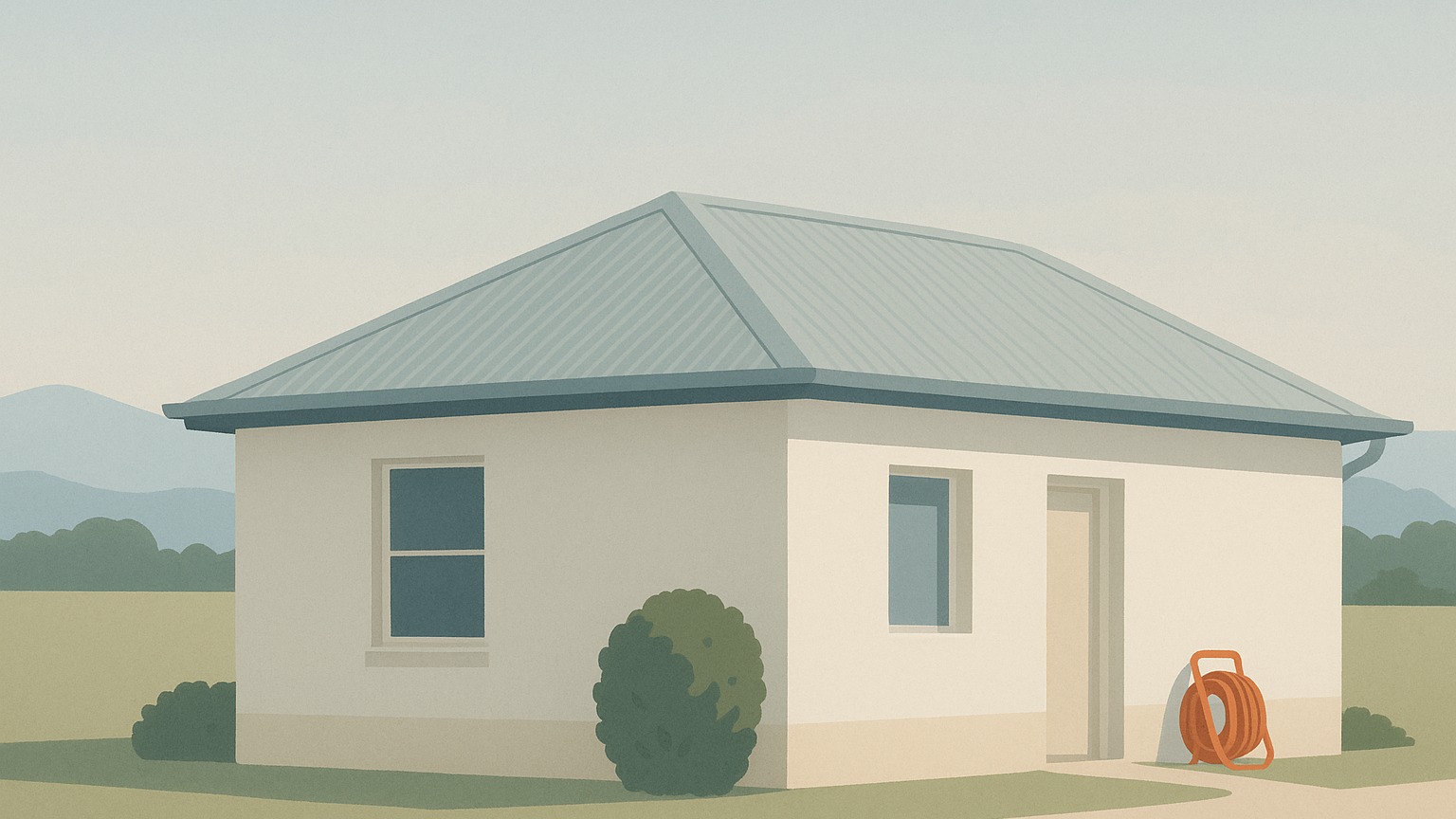
Know where you'll go
"Leave early" only works as a plan if you've already answered the follow-up questions: leave to where, by which route, and when exactly.
Pick a destination well away from the fire risk area — a relative's home, a friend's place in a different suburb, or a formal evacuation centre if that's what's designated for your area. Have a backup route in mind in case your first road is closed. And agree on a trigger, not a feeling: "we leave when the fire danger rating hits X" is a plan; "we'll see how it looks" is not.
Stay informed once fire season starts
Once your plan exists, the job shifts to staying aware. Know your local fire danger rating, keep the Fires Near Me app (or your state's equivalent) installed, and understand what each alert level actually means for you before you need to act on one in a hurry.
Our take
None of this is complicated on its own — the value is entirely in doing it now, calmly, rather than improvising later. A plan that covers the decision, the household, the property and the destination is a genuinely different position to be in than working it out as smoke appears on the horizon.
Frequently asked questions
Is it safer to stay and defend, or leave early in a bushfire?
Fire authorities consistently recommend leaving early as the safest option for most households. Staying to defend should only be a genuine, prepared choice — not a default. Source: NSW Rural Fire Service.
What should I actually do to prepare my house for bushfire season?
The core actions are clearing gutters, repairing roof gaps, screening windows and doors against embers, keeping the garden clear of built-up fuel, having adequate hose reach, and making sure your insurance is current. Source: NSW Rural Fire Service.
How do I actually make a bush fire survival plan?
Most state fire services provide a free plan template or tool — the NSW RFS points to a plan you can complete in around five minutes at myfireplan.com.au. The plan itself just needs to cover the decision, the household, the property and the destination. Source: NSW Rural Fire Service.
When should I have my bushfire plan ready?
Before fire season starts in your area — for most of Australia, that means having it sorted well before October, not once a fire danger warning is already current.
Does a bushfire plan matter if I'm renting?
Yes — the household and destination parts of the plan matter regardless of whether you own the property, and even renters can usually do at least some of the simpler property preparation (clearing gutters and garden debris) with the landlord's knowledge.
Build your plan
Your free ComfortScore includes a Resilience score covering exactly this — an eight-step bushfire plan across your decision, your household, your property and your destination, that you can complete once and keep as a document to share with the people who need it.
Start with your home. Then build the plan around it.
Before you get quotes
See when your home actually uses power
Get your free ComfortScore, then upload a PDF electricity bill. We’ll break down your peak, shoulder and off-peak use and your solar exports, so you can test how shifting use into the middle of the day, or adding a battery, changes when you buy from the grid.
1
Get your ComfortScore
Answer a few questions about your home. It’s free.
2
Upload a PDF bill
We read your usage by time of day, your tariff and your solar exports.
3
Try the what-ifs
Move load into the solar day or add a battery, and see how your grid use shifts.
What to read next

Get the next guide before you need it
One email when we publish something new — practical guides only, unsubscribe any time.